
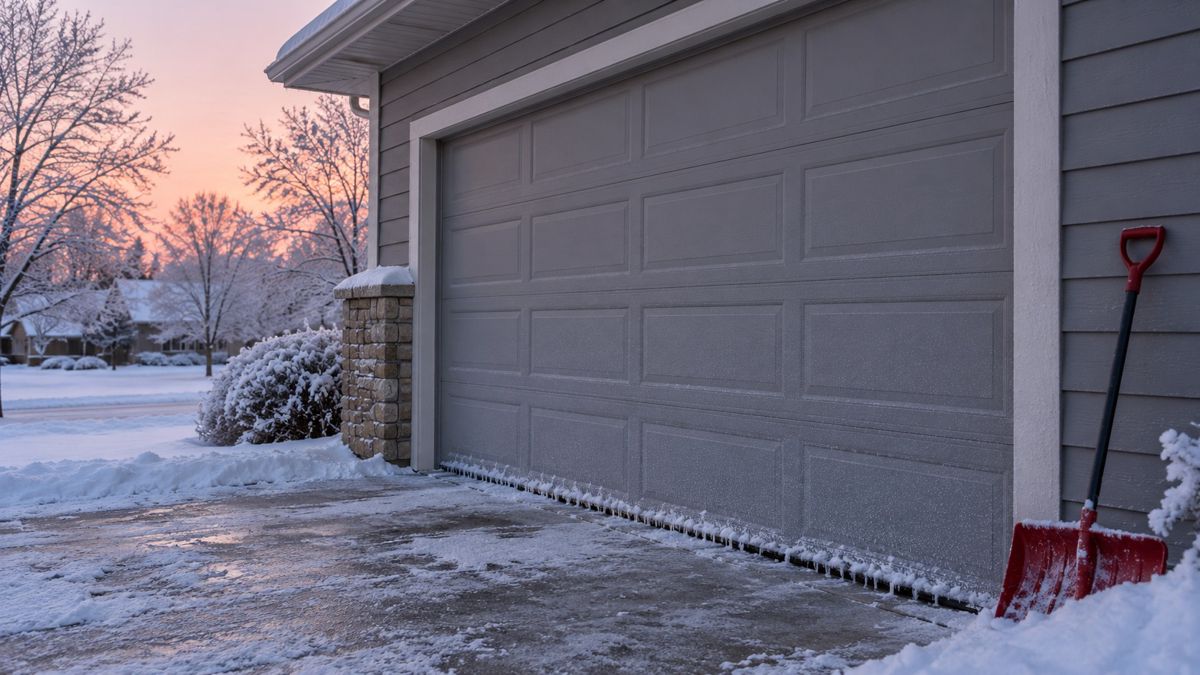
The short answer is simple: do not replace a garage door spring yourself. A broken spring is one of the most common garage door failures in Minneapolis, and it looks like an easy fix in a video. It is not. The part that fails is also the part that holds the most stored energy in your whole house, and the mistakes that hurt people happen in a split second. Here is why the job belongs to a trained technician, what to do when a spring lets go, and how to hire the right person.
What makes a garage door spring so dangerous?
A garage door can weigh well over a hundred pounds, and a double door weighs a good deal more. You can lift it by hand only because springs carry almost all of that weight. The spring is wound tight to do that job, which means it is holding a large amount of energy at all times.
Most modern doors use torsion springs, which sit on a steel bar above the opening. Older doors often use extension springs along the sides of the tracks. Both kinds can release their force suddenly if a tool slips, a fitting gives way or a part is already cracked. The result can be a heavy bar or a metal fragment moving very fast, or a door dropping with no warning.
The opener does not carry this load. It is built to guide a balanced door, not to lift a full-weight one. That is why a broken spring changes everything about how the door behaves, and why it pays to understand what is happening before you touch anything.
Why do springs break more often in a Minneapolis winter?
Springs wear out by cycles. Every time the door goes up and down, the metal flexes. After enough cycles it tires and snaps. Many standard springs are rated for roughly 10,000 cycles, and a family that uses the garage as the main entry can add several cycles a day. Springs with a higher cycle rating are available if you want a longer interval.
Cold speeds up the end of that life. Steel becomes more brittle as temperatures drop, so a spring that was already near its limit can fail during a long freeze. Other winter factors add load:
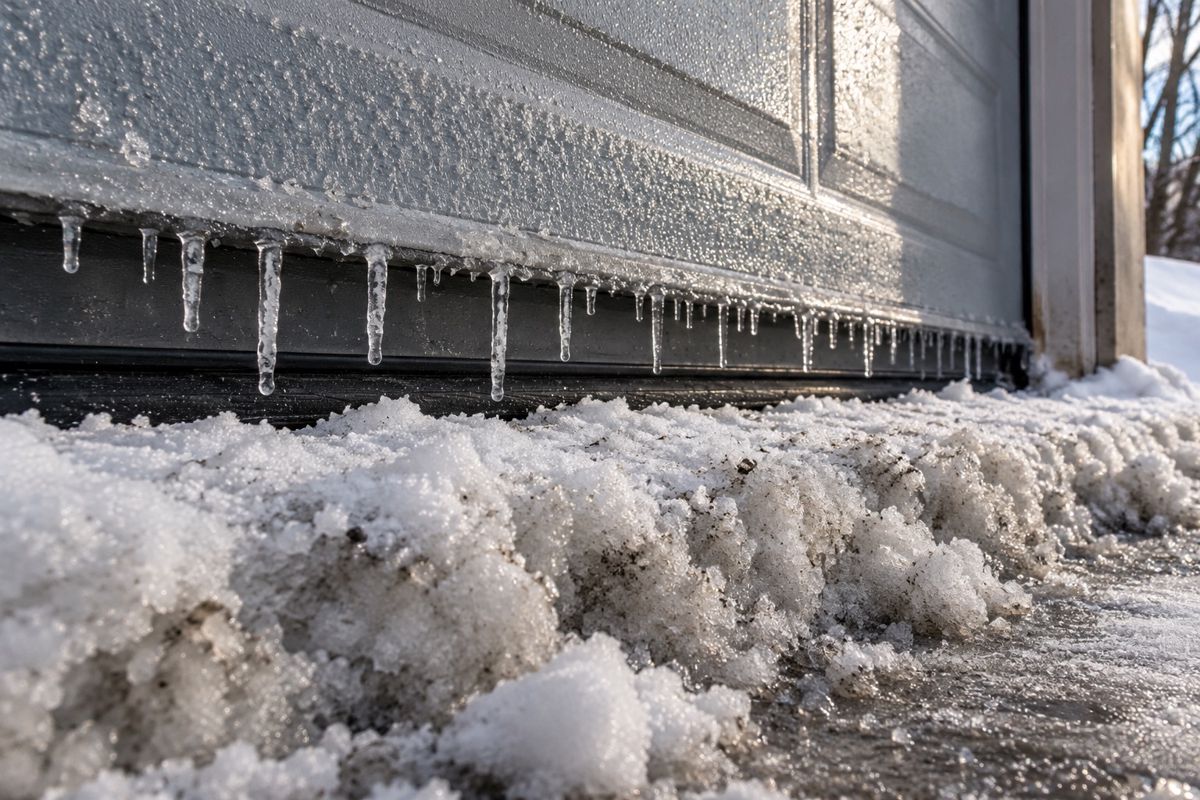
- Ice that glues the bottom seal to the concrete, so the door strains against the floor every time it starts to open.
- Moisture and frost inside the door sections, which adds weight and upsets the balance.
- Lubricant that thickens in the cold and makes rollers, hinges and bearings drag.
- Road salt that is carried in on tires and speeds up rust on cables and hardware.
That is one reason many homeowners notice a bang from the garage on the coldest mornings of the year.
What goes wrong when homeowners try it anyway?
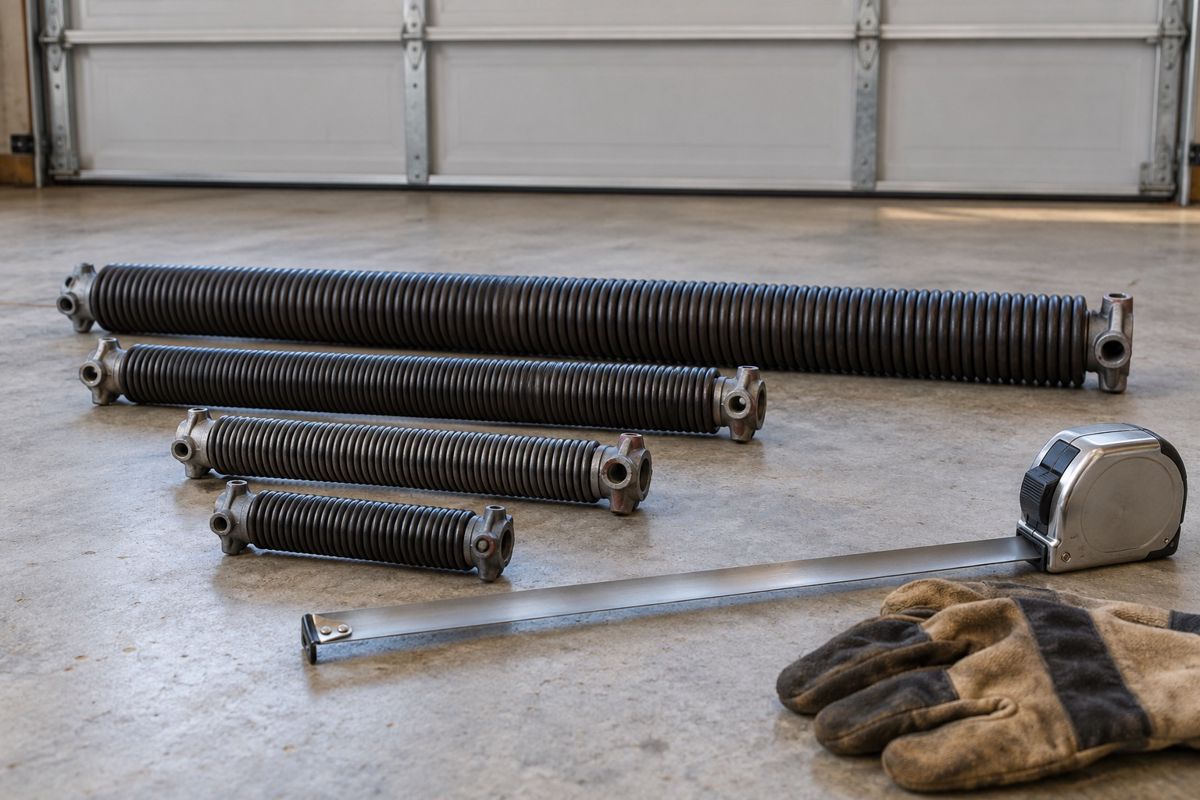
Springs are not sold in one size. A spring has to match the weight, height and type of the door, and the right choice is not obvious from a photo on a store shelf. Common problems include:
- A spring that is too weak or too strong for the door, which leaves it heavy, or makes it fly upward.
- Tension that is set wrongly, which wears the opener, the cables and the rollers faster.
- A damaged cable, drum or bearing that went unnoticed and fails soon after.
- Tools that do not fit the job, and hands or faces in the wrong place when something moves.
We are not going to list the steps here, and we would encourage you to distrust any page that does. Written steps give people confidence that they do not yet have the training to back up. A technician has done the job many times, knows the signs that something is about to give, and carries the right bars, clamps and replacement parts.
The savings are also small compared with the risk. Parts bought piecemeal, a second trip when the first spring is wrong, and a door that is out of balance all eat into any money saved.
What should I do when I think a spring has broken?
Many people hear a loud bang from the garage, then find that the door will not lift. Other signs are a visible gap in the coil above the door, a door that looks crooked, cables that hang loose or an opener that hums and strains but does not move the door.
If you suspect a broken spring, keep the next steps simple:
- Stay out from under the door and keep children and pets away from it.
- Do not run the opener again. It can burn out trying to lift the full weight.
- Do not try to force the door up or down by hand.
- Look but do not touch the spring, the bar or the cables.
- Call a trained garage door technician and describe what you saw and heard.
If a car is stuck inside, tell the technician when you call. They can tell you what is safe to do while you wait. Do not ask a friend with a tool box to fix it for you either, since the same risks apply to them.
What affects the cost of a professional spring replacement?
Prices vary, so any figure online is only a rough guide. These are the factors that move the quote:
- Spring type. Torsion and extension systems use different parts and different labor.
- Door size and weight. A wide insulated double door needs stronger springs than a light single door.
- Cycle rating. Longer-life springs cost more up front and last longer.
- One spring or a pair. Many technicians suggest replacing both on a two-spring door, since the second one is the same age.
- Related parts. Frayed cables, worn drums, bearings and rollers may need replacing at the same visit.
- Door condition. A door that has come off its track or has bent sections adds time and parts.
Ask for a written quote that lists the parts and the labor before work begins. If one quote is much lower than the rest, ask what has been left out.
How do I choose a technician I can trust?
You do not need to be an expert to ask good questions. Start with these:
- Ask what licenses, if any, apply to the work and ask to see proof of liability insurance.
- Ask for the quote in writing, with parts and labor separated.
- Ask what cycle rating the new springs have and what warranty comes with the parts and the labor, and get the terms in writing.
- Ask whether the cables, rollers and bearings were inspected as part of the visit.
- Be careful of anyone who pressures you to decide on the spot or who will not explain what failed.
A good technician will show you the broken spring, explain why it failed and tell you what else is worn. They will also tell you plainly if your door needs more than a spring.
Where to go from here
If your door is stuck, noisy or heavy, you probably have a spring problem and not an opener problem. Read what a repair involves on our garage door spring repair page. If the door has also slipped sideways or a cable has snapped, our cable and track repair page explains that side of the job. Either way, leave the springs to a professional and keep your hands, and everyone else's, clear of the door until they arrive.